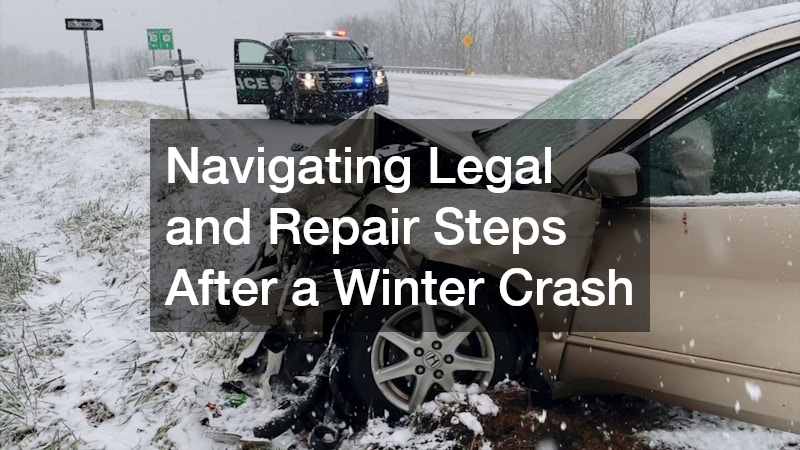
The path to recovery following a cold-weather accident is rarely straightforward. Unlike a minor summer fender-bender, winter pileups frequently involve a mix of commercial transport rigs, municipal vehicles, and passenger cars. This means that sorting out who is at fault and getting your vehicle properly repaired requires dealing with multiple insurance companies, corporate legal teams, and specialized mechanical shops all at once. Navigating this overwhelming process without a clear plan can lead to costly mistakes, both financially and legally.
1. Immediate Safety Protocols and Scene Management

The moments immediately following a highway collision are the most dangerous. On icy or snowy roads, the risk of a secondary, chain-reaction crash remains incredibly high as oncoming traffic struggles to stop. Your absolute priority must be establishing physical safety for yourself and your passengers before attempting to assess any property damage.
If your vehicle is still operational and it is safe to do so, carefully move it to the shoulder or a designated breakdown lane to get out of the flow of traffic. Turn on your hazard lights immediately to warn approaching drivers. If the vehicle cannot be moved, and you can safely exit without stepping into active traffic lanes, move past the guardrail or up an embankment.
Once you are in a secure position, call emergency services to report the accident. Provide the dispatcher with your precise location, noting nearby mile markers, exit signs, or cross streets. Clearly state whether anyone appears to be injured so that medical personnel can be dispatched alongside law enforcement. While waiting for help to arrive, keep your winter clothing on to protect against hypothermia, which can set in rapidly when shock reduces your body’s ability to regulate temperature.
2. Documenting Evidence Under Harsh Weather Conditions
Gathering accurate evidence at the scene of a winter crash is vital for any future insurance or legal claims, but the weather itself makes this task highly time-sensitive. Falling snow can quickly cover skid marks, obscure patches of black ice, and hide vehicle debris that could prove how the accident occurred.
As soon as it is safe to do so, use your smartphone to take comprehensive photographs and videos of the entire scene. Capture the positions of all vehicles involved from multiple angles before they are moved by emergency crews. Document the specific environmental factors, including unplowed lanes, active snowfall, blowing drift conditions, and any nearby warning signs.
Be sure to capture close-up photos of the damage to every vehicle, as well as wider shots that show the overall layout of the roadway. Look around to see what types of vehicles were involved in the initial collision; for instance, note if municipal or commercial snowplows were actively clearing the area or if their positioning contributed to the hazard. If your vehicle is completely immobilized, you will need to coordinate with law enforcement to arrange a heavy-duty towing service equipped to handle recovery in freezing temperatures without causing further structural damage to your car.
3. Exchanging Information and Identifying Key Witnesses
Never leave the scene of an accident without exchanging vital information with the other drivers involved, regardless of how minor the damage may initial appear. In winter pileups, determining who hit whom can become incredibly complicated, making clear documentation essential.
Approach the other operators calmly and collect their full names, contact numbers, driver’s license numbers, and insurance policy details. If a commercial vehicle is involved, write down the name of the shipping company printed on the side of the cab or trailer, along with the USDOT number and license plate registrations.
Look for independent witnesses who stopped to help or drivers who witnessed the initial impact. Ask for their names and phone numbers, as their unbiased statements can prevent an insurance company from shifting the blame onto you later. Avoid discussing the specifics of who caused the crash with anyone at the scene, and never apologize out of politeness, as these statements can be misinterpreted as an admission of fault.
4. Navigating Passenger Vehicle Damage and Restoration
Once the initial shock wears off and you are away from the scene, your attention will naturally turn to repairing your personal transportation. Standard consumer vehicles are built with complex crumple zones and sensitive electronic sensors that can be severely compromised in a high-impact winter collision.
It is crucial to have your car taken to a certified facility that specializes in structural integrity and precise frame alignment. Cold weather can mask certain types of damage, such as hairline fractures in suspension components or cracked plastic fluid reservoirs that may not leak until the vehicle warms up.
Work closely with your insurance adjuster, but remember that you have the right to choose which repair shop handles your vehicle. Demand that the technician performs a complete diagnostic scan to check the deployment readiness of your airbags and the calibration of your anti-lock braking systems. Ensuring that a reputable auto body shop utilizes original equipment manufacturer parts rather than cheap aftermarket alternatives will preserve both the safety and the resale value of your vehicle. This careful oversight is particularly vital when dealing with corporate fleets that utilize extensive truck services to maintain their delivery vehicles, as their insurance adjusters often push for rapid, low-cost settlements.
5. Managing Heavy-Duty Commercial Mechanical Needs
When a winter accident involves large commercial transport vehicles, the mechanical repair process becomes vastly more complex than a standard passenger car fix. Semi-trucks, box trucks, and large delivery vans rely on specialized engineering systems that require expert attention to remain roadworthy.
Commercial vehicles utilize complex air brake systems, heavy-duty diesel powertrains, and intricate electronic logging networks. A collision in freezing temperatures can snap brittle airlines, warp massive steel axles, and damage the integrity of the fifth-wheel coupling system that secures the trailer to the tractor.
For fleet managers or owner-operators involved in a winter highway wreck, getting the vehicle back into service safely requires a facility capable of handling advanced diagnostics. Specialized mechanics must carefully inspect the structural frame rails for twisting or alignment issues caused by sliding on ice. These intensive semi truck repairs must be thoroughly documented to ensure that all mechanical work complies with strict federal safety standards. Furthermore, ensuring a complete truck and trailer repair process is essential because a trailer that tracks improperly due to a bent axle poses a severe jackknife hazard during future winter storms.
6. Seeking Immediate Medical Attention and Tracking Injuries
It is incredibly common for accident victims to feel fine immediately after a crash, only to wake up the next morning in excruciating pain. The adrenaline rush triggered by a violent collision can easily mask serious internal injuries, soft tissue damage, and concussions.
You must seek a professional medical evaluation within twenty-four hours of the accident, even if you believe your injuries are minor. Conditions like whiplash, internal bleeding, and traumatic brain injuries often have delayed onset symptoms that worsen over time if left untreated.
Go to an emergency room or an urgent care clinic and explain exactly what happened, ensuring the doctor documents that your visit is directly related to the motor vehicle accident. Keep a detailed daily journal of your physical symptoms, pain levels, and any limitations the injuries place on your daily life. Save every medical bill, prescription receipt, and physical therapy record, as this documentation serves as the foundational evidence required by lawyers to prove the true extent of your damages. Without a prompt medical evaluation, an insurance company will likely argue that your injuries were caused by an unrelated event or that they are not as severe as you claim, which is why consulting an experienced personal injury lawyer early on is a critical step in protecting your rights.
7. Understanding the Realities of Winter Driving Liability
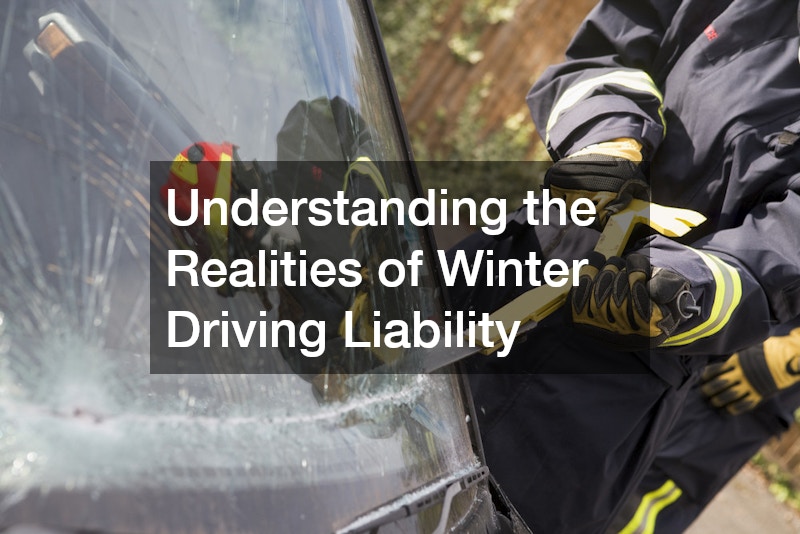
A common misconception among drivers is that bad weather absolves them of blame for an accident. Insurance companies often try to label winter collisions as unavoidable acts of nature, but the legal reality is quite different.
Every driver on the road has a legal duty to operate their vehicle with reasonable care based on the current environmental conditions. This means that if the posted speed limit is sixty-five miles per hour, but the highway is covered in packed snow and ice, driving at the speed limit can be considered negligent behavior.
Drivers are expected to slow down, increase their following distance, and ensure their vehicles are properly equipped with functional tires and clear windshields. To prove liability, your legal team must demonstrate that the other driver failed to adjust their behavior to the winter conditions. This involves analyzing speed data, weather reports, and witness statements to show that the crash could have been avoided had the other party exercised proper caution on the slippery roadway.
8. Collecting and Securing Digital Vehicle Data
Modern vehicles are essentially rolling computers, constantly recording data about speed, braking, steering angles, and system deployments. In the wake of a serious winter crash, this digital information is often the most objective evidence available to prove what actually happened.
Commercial trucks are equipped with Electronic Control Modules, often referred to as black boxes, which capture critical parameters in the seconds leading up to a collision. This data can reveal exactly how fast the truck was traveling, whether the driver applied the brakes, and if the cruise control was improperly engaged during a snowstorm.
Passenger vehicles also contain event data recorders within their airbag control modules that log similar information during a crash. It is absolutely vital to legally secure this data before the vehicle is repaired, sold, or scrapped, as the information can easily be overwritten or lost forever. A qualified legal representative can send a formal spoliation letter to the vehicle owner or insurance company, legally requiring them to preserve all digital evidence for inspection by accident reconstruction experts.
9. Standing Ground Against Deceptive Insurance Tactics
Insurance companies are businesses focused on minimizing payouts and protecting their corporate bottom lines. Following a major winter accident, especially one involving commercial vehicles, an insurance adjuster will likely contact you very quickly to offer a settlement.
These early offers are almost always far lower than what you actually need to cover your long-term medical care, lost wages, and vehicle replacement costs. Adjusters may sound incredibly empathetic and helpful over the phone, but their goal is to convince you to sign a liability release before you fully understand the permanent scope of your physical injuries.
Never give a recorded statement to the other driver’s insurance company without legal counsel present, as adjusters are trained to ask misleading questions designed to make you admit fault. They might twist your words or use your lack of immediate medical care against you to deny the claim entirely. To level the playing field, you need a local personal injury attorney who understands these high-pressure tactics and can handle all communication on your behalf. Partnering with dedicated personal injury lawyers ensures that your case is valued accurately based on comprehensive medical prognoses and real economic losses, rather than a rushed estimate calculated by an insurance computer program.
10. Calculating the True Financial Impact of Your Losses

To secure a fair recovery, you must look beyond your current medical bills and consider the lifelong financial consequences of the accident. A serious injury can alter your career trajectory, reduce your earning capacity, and require ongoing medical care for years to come.
Surviving a winter road accident is a traumatic experience, but the steps you take in the days and weeks that follow will dictate how successfully you recover physically, financially, and logistically. By prioritizing scene safety, gathering meticulous evidence, and seeking immediate medical evaluations, you lay a solid foundation for both your physical healing and your insurance claims.
Property damage and complex legal liability cannot be sorted out overnight, particularly when heavy commercial vehicles and hazardous weather conditions complicate the picture. Navigating these challenges on your own while trying to heal from severe injuries places an unfair burden on you and your family.
Instead of letting corporate insurance adjusters dictate your future, rely on specialized professionals to guide you through the recovery process. Whether dealing with certified mechanical specialists to restore your vehicle’s safety or working with skilled legal counselors to fight for your rights, having the right team in your corner ensures that you can focus entirely on what matters most: reclaiming your health and peace of mind.